
Learning, Movement and Connection
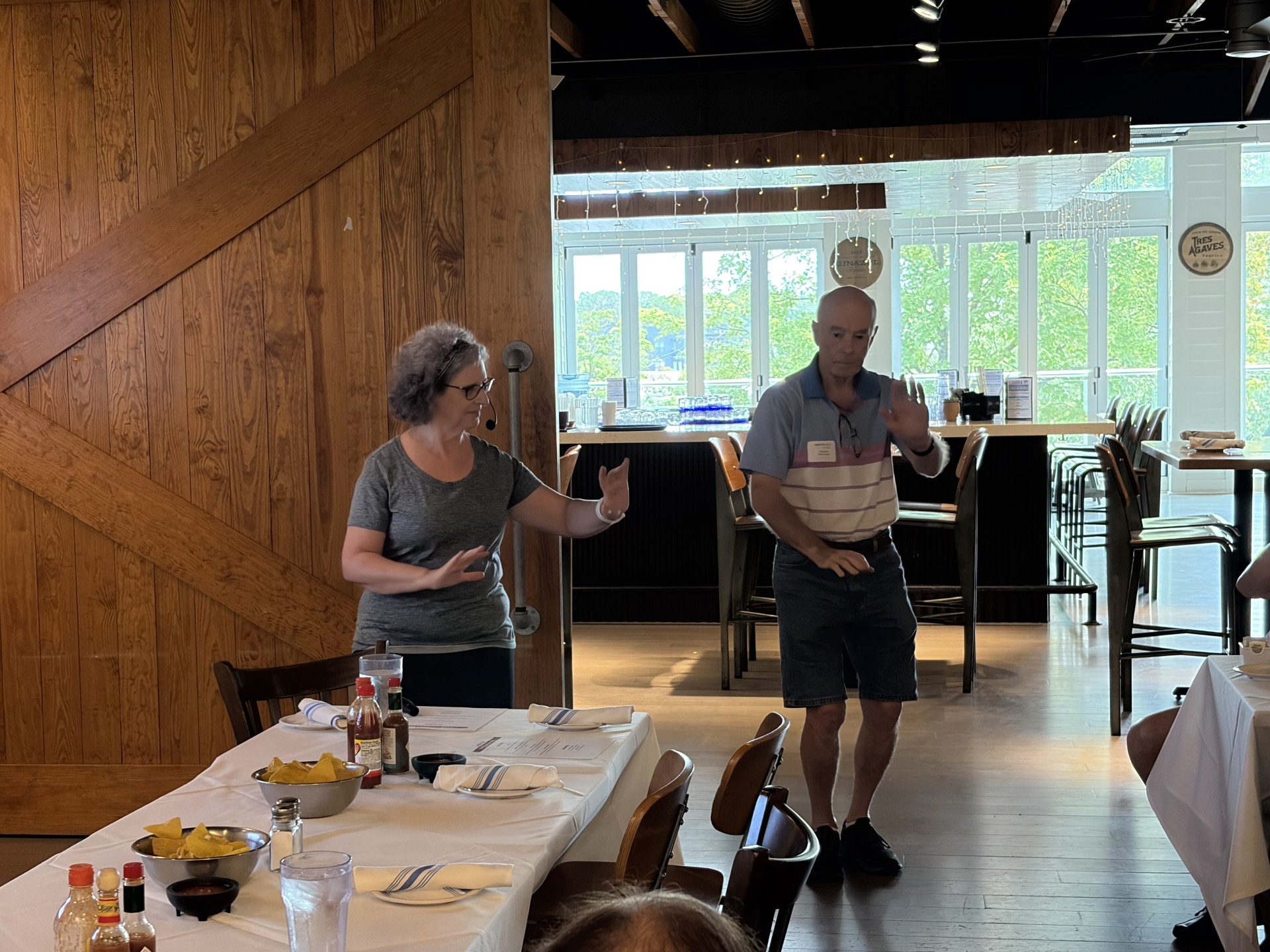
At this week’s ThriveMore at Home member gathering, members enjoyed an engaging and interactive presentation on Tai Chi led by guest speaker Sharon Mills.
With more than a decade of experience teaching Tai Chi, Mills is certified by the Tai Chi for Health Institute to teach Tai Chi for Arthritis and Fall Prevention. She began her presentation at Cantina 18 in Raleigh by addressing a common misconception that many people encounter online in cute, sharable graphics.
“If you see those, you can ignore them,” Mills said of the social media videos and advertisements promoting so-called “Tai Chi Walking.” “There's nothing Tai Chi about any of this.”
From there, Mills helped attendees understand what Tai Chi really is and why it has remained relevant for centuries.
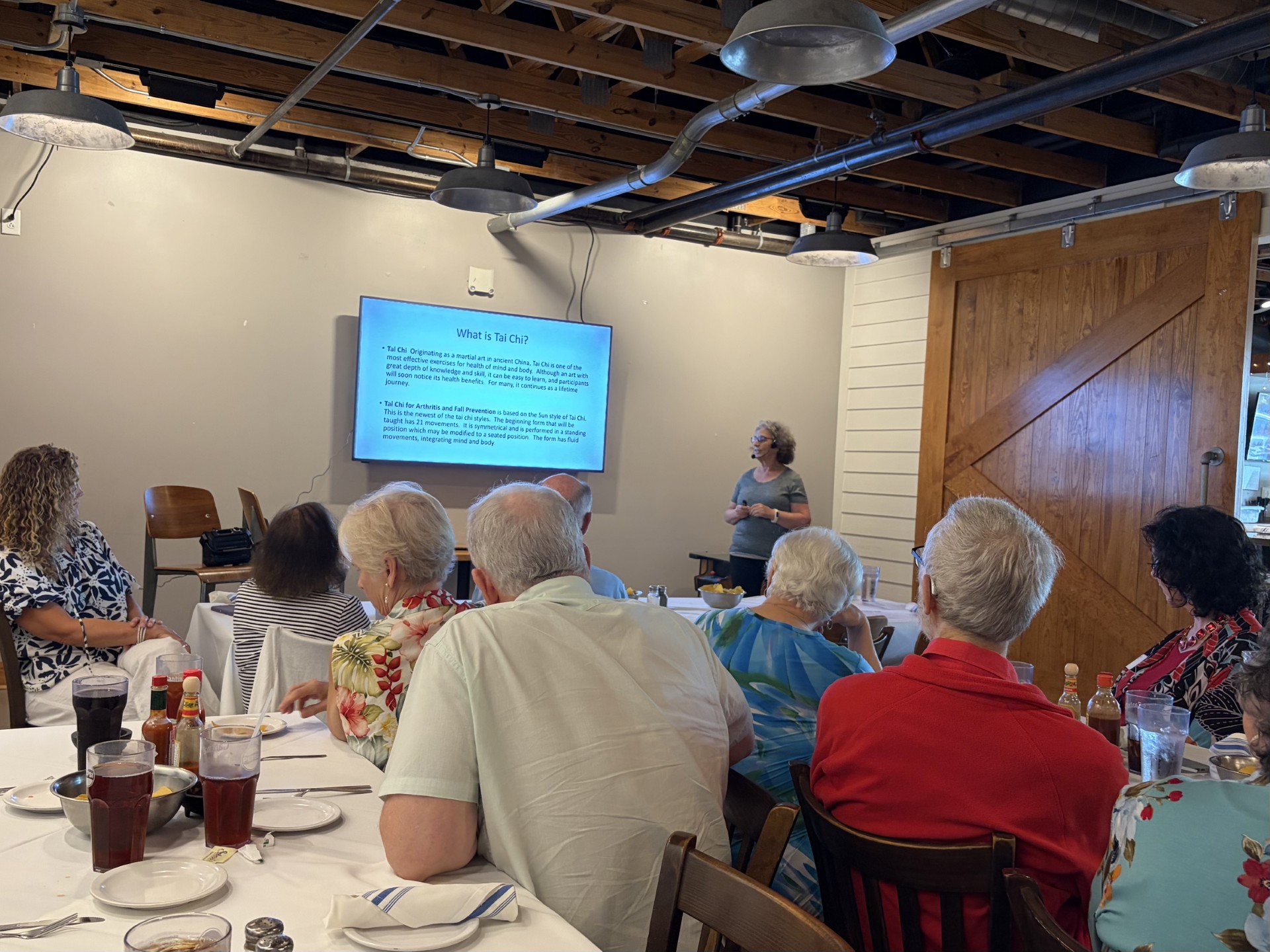
Tai Chi originated as a martial art, she explained. It's one of the most effective exercises for health of mind and body, and there is a lot of depth to Tai Chi.
“It is a lifelong art that you can really dive deep into and keep learning, but you can also learn it fairly quickly,” Mills said.
A Practice with Deep Roots
Mills shared that Tai Chi traces its origins to China, where it was originally developed as a method of self-defense. Practitioners performed slow, controlled movements that appeared dance-like while concealing powerful defensive techniques.
Today, Tai Chi is practiced throughout the world primarily for health, wellness and relaxation. Mills explained that the style she teaches, Sun Style Tai Chi, was developed in the early 20th century and is particularly accessible for older adults because of its upright posture, gentle movements and emphasis on balance.
She also introduced members to Qigong, an even older practice that combines movement and breathing exercises to cultivate energy, focus and relaxation. She recommended starting with Tai Chi before moving on to Qigong.
Why Tai Chi Matters
Research continues to demonstrate the value of Tai Chi for healthy aging. According to Mills, medical studies have shown that regular practice can provide a wide range of benefits, including:
• Improved balance and fall prevention
• Increased muscular strength without lifting weights
• Better flexibility and mobility
• Reduced arthritis pain, particularly in the knees
• Improved posture
• Enhanced focus and memory
• Reduced stress and anxiety
• Improved cardiovascular health
• Increased confidence in movement
One benefit that Mills is particularly passionate about is fall prevention. She shared that one our of three people over the age of 65 fall each year.
“Tai Chi practice helps prevent falls by increasing body awareness or proprioception, with emphasis on weight shift,” she said.
As a former physical therapist, Mills explained how Tai Chi helps people maintain everyday functional movements such as stepping backward, shifting weight safely and moving with confidence. Those skills can make a big difference in maintaining independence as we age.
Putting Theory into Practice
After discussing Tai Chi’s history and benefits, Mills demonstrated a beginner Sun Style Tai Chi form with the help of ThriveMore at Home member Sig Schlesinger, who also practices Tai Chi. Attendees watched as the pair moved through a series of slow, fluid movements designed to build balance, coordination and body awareness.
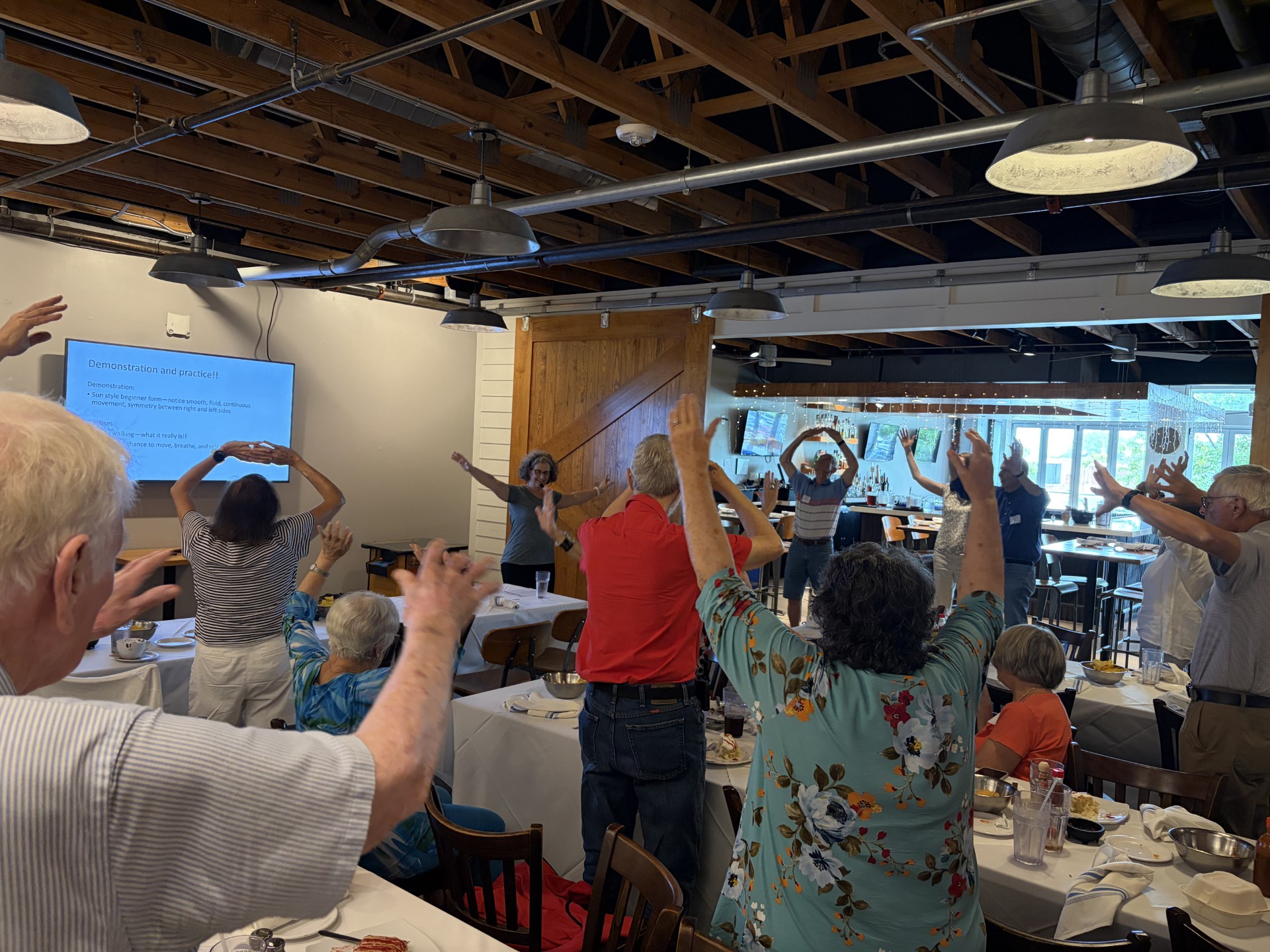
Following lunch, members had the opportunity to participate themselves. Mills guided the group through Tai Chi exercises, encouraging attendees to focus on gentle movement, breathing and relaxation.
The response was enthusiastic. When Mills invited members to join in, many eagerly followed along, practicing movements together and asking to continue after she initially suggested concluding the demonstration.
The gathering was a reminder of something ThriveMore at Home members already know well: staying healthy isn't just about medical care. It's also about continuing to learn, move and connect with others.
One of the many advantages of ThriveMore at Home membership is having access to wellness support, including nursing resources and health education opportunities like this one. Programs such as the member gathering help participants discover new tools and strategies for maintaining their independence, well-being and quality of life for years to come.
